

Men’s skin has its own set of characteristics that can influence the concerns we see in clinic. Hormonal activity can contribute to greater oil production, while facial hair and regular shaving can make irritation, ingrown hairs and inflammation more common. Over time, sun exposure, collagen loss and previous acne can also leave their mark through pigmentation, scarring, enlarged pores, lines and changes in firmness.
This means good men’s skincare is not simply about using products labelled "for men" or booking a generic facial. The starting point is understanding why the skin is behaving the way it is and choosing an approach that addresses the underlying concern.
At Sciene in Muswell Hill, we see men with everything from persistent congestion and breakouts to shaving irritation, acne scarring, redness, pigmentation and signs of skin ageing. Treatment can look very different depending on which of these is present and how significantly the skin is affected.
In this guide, we look at some of the most common men’s skin health concerns, why they develop and the facial treatments that can help, including when a combination or more targeted approach may be appropriate.
How Is Men’s Skin Different From Women’s Skin?
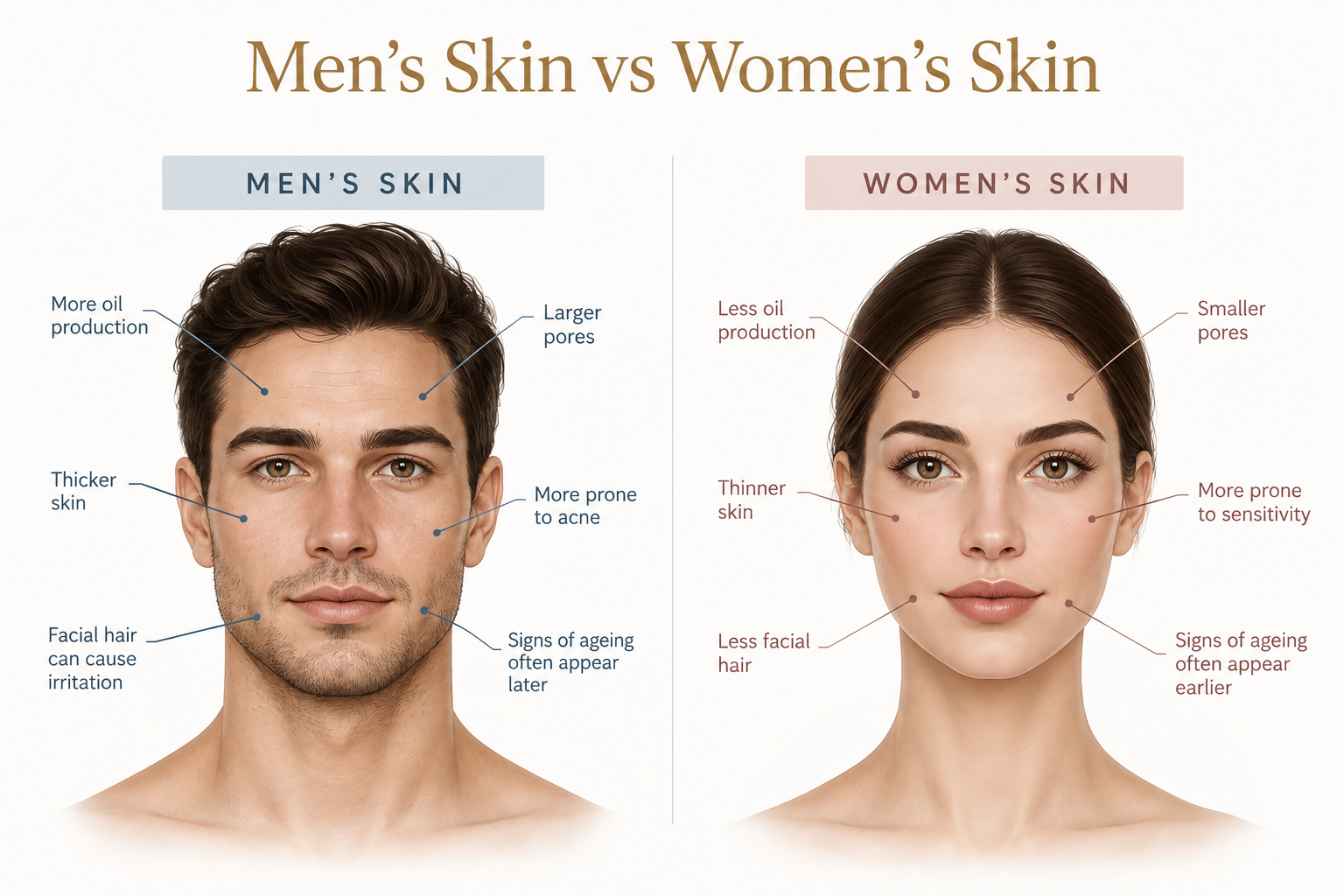
Men’s skin tends to be thicker and oilier, which can make enlarged pores, congestion and acne more common. Facial hair and regular shaving can also increase the likelihood of irritation and ingrown hairs.
These differences matter when choosing skincare and treatments. What looks like acne, for example, may actually be shaving-related inflammation, so understanding the cause is important before deciding how to treat it.
Why Do Men Get Oily Skin, Blackheads and Enlarged Pores?
Oil itself is not unhealthy. Sebum plays an important role in protecting and lubricating the skin. Problems tend to develop when excess sebum combines with dead skin cells and becomes trapped within a follicle, contributing to blackheads, whiteheads and breakouts. Pores can also appear more noticeable when they are congested.
For relatively mild congestion, we may begin with a facial that thoroughly cleanses and exfoliates the skin rather than immediately moving towards more intensive treatment.
Hydrabeauty Bespoke Treatment uses vortex infusion technology through a multi-stage treatment to cleanse, exfoliate and hydrate the skin. It can be adapted to concerns including congestion, dullness, dehydration and fine lines.
This can be particularly useful when skin feels oily but also tight or dehydrated. The aim is not simply to strip away oil, but to improve congestion while maintaining healthy hydration.
The Sciene Signature Facial provides another personalised option, combining cleansing, targeted exfoliation, extractions and massage before finishing with Dermalux red light. It can work well when the skin needs regular maintenance and refinement rather than more intensive correction.
What Are the Best Treatments for Male Acne and Acne Scarring?
The right treatment depends on whether we are dealing with congestion, active acne or the scarring left behind, as each requires a different approach.
For blocked pores and superficial build-up, AlumierMD or Mesoestetic skin peels can help refine the skin through controlled exfoliation. Where breakouts are more active and inflammation is present, Harmony ClearSkin may be more appropriate, with Dermalux LED Light Therapy used alongside treatment to support acne-prone, inflamed skin.
Once active acne is under control, we can turn our attention to any remaining uneven texture or scarring. Dermapen Microneedling stimulates the skin’s natural repair response and collagen production, making it useful for acne scarring and uneven texture. For deeper or more established scarring, iPixel Laser Resurfacing offers a more intensive approach to skin remodelling.
At Sciene, we would usually control active breakouts before progressing to scar treatment. More severe acne, particularly nodules or cysts, may require medical assessment before facial treatments are considered.
Can Facial Treatments Help With Razor Bumps and Shaving Irritation?
They can help with some of the effects, but we first need to distinguish simple irritation from acne, folliculitis or pseudofolliculitis barbae.
Razor bumps commonly develop when a shaved hair re-enters the skin and triggers an inflammatory reaction. They are particularly associated with coarse or curly facial hair and commonly appear around the beard and neck.
Repeated inflammation can leave lingering redness, uneven texture and, in some skin tones, areas of post-inflammatory pigmentation. If the skin is actively irritated, the priority is usually to calm it rather than immediately applying an intensive resurfacing treatment. Once inflammation is under better control, treatment can be directed towards any remaining texture or pigmentation.
Shaving technique and home skincare also matter. Clinic treatments can improve the skin, but repeatedly aggravating the same follicles between appointments can limit progress.
What Are the Best Facial Treatments for Men With Pigmentation or Redness?
Uneven colour can have several causes, so pigmentation should not be treated as one single condition.
For some men, brown marks develop after acne or shaving inflammation. Others notice sun spots and accumulated sun damage. Redness may come from visible vessels, sensitivity or another underlying skin condition.
At Sciene, Harmony Flawless Skin is designed to address pigmentation, redness, broken capillaries and uneven tone using a dual-modality laser approach.
Where several concerns coexist, the Sciene x Harmony Bespoke Laser Facial allows different technologies, including ClearLift, ClearSkin, IPL, AFT and vascular lasers, to be selected and layered according to what we see in the skin.
This can be useful because skin rarely presents with one isolated issue. Someone may have pigmentation across the cheeks, redness around the nose and early changes in texture at the same time. A personalised approach allows each concern to be treated appropriately rather than treating the whole face in exactly the same way.
What Are the Best Anti-Ageing Facial Treatments for Men?
Men often describe ageing concerns differently. Rather than asking to look younger, we frequently hear that someone looks more tired than they feel, that their skin has become rougher, or that the face seems less firm than it used to.
The treatment choice depends on which change is responsible.
If dullness, dehydration and surface quality are the main concerns, Hydrabeauty or a personalised facial may be enough to refresh the skin.
When collagen loss and early changes in firmness become more noticeable, ClearLift offers a non-invasive laser treatment designed to stimulate collagen, improve elasticity and soften fine lines.
For more noticeable laxity or changes in facial firmness, Radio Frequency Skin Tightening with Alma X RF uses controlled thermal energy to stimulate collagen, improve elasticity and contour the skin.
Morpheus8 provides another option when deeper remodelling is appropriate. It combines fractional radiofrequency with microneedling to remodel collagen, tighten the skin and improve facial contours.
The important point is that stronger does not automatically mean better. The appropriate treatment is the one that matches the degree and type of change we are trying to improve.
How Do You Choose and Combine the Right Facial Treatments for Men?
The best treatment plan starts with the condition of your skin and the concern you want to address, rather than simply choosing a facial designed for men.
At Sciene, we assess factors such as congestion, hydration, sensitivity, pigmentation, inflammation, texture and signs of ageing before deciding whether a facial, peel, LED, laser or collagen-stimulating treatment is most appropriate.
Treatments can also be combined or introduced in stages when several concerns are present. For example, ClearSkin and Dermalux LED may be used to manage active breakouts before progressing to Dermapen Microneedling or iPixel for remaining acne scarring. Someone concerned about pigmentation and texture may require a different combination.
The aim is not to use as many treatments as possible, but to address concerns in the right order and adapt the plan as the skin improves.
Frequently Asked Questions About Men’s Skin Health
Do I need to grow my beard before a facial?
Usually not. However, requirements can vary depending on the treatment being performed. If a laser or device-based treatment is planned, the clinic can advise you beforehand about shaving and facial hair.
Can I Have a Facial If I Have a Beard?
Yes, absolutely. At Sciene, our male-specific facials, SignatureMan and HydraMan, are designed with men's skin and facial hair in mind. Both treatments pay particular attention to the beard area, with deeper cleansing around the hair follicles to help remove excess oil, dead skin cells and build-up that can contribute to congestion and ingrown hairs.
These treatments can be particularly beneficial for men who experience shaving irritation, blocked pores or uneven skin texture around the beard and neck.
How soon before an event should a man have a facial?
This depends on the treatment. A hydrating or maintenance facial has a very different recovery profile from microneedling, a peel or fractional laser resurfacing. If you have an important event approaching, tell your practitioner so the timing can be planned appropriately.
Should men use SPF every day?
Yes. Daily broad-spectrum sun protection is relevant regardless of gender, particularly if you are trying to manage pigmentation, signs of photoageing or maintain the results of corrective skin treatments.
Can I go to the gym after a facial treatment?
It depends on what you have had done. Some advanced treatments require a temporary break from strenuous exercise, heat and sweating, whereas others involve little interruption to your routine. Follow the aftercare given for your specific treatment.
Take a More Targeted Approach to Men’s Skin Health
Good skin treatment does not need to be complicated. It needs to be appropriate.
Whether you are dealing with persistent breakouts, razor bumps, enlarged pores, acne scarring, pigmentation or changes in skin firmness, understanding what is causing the concern is the first step towards choosing the right approach.
At Sciene in Muswell Hill, North London, we assess your skin before recommending a treatment plan, with options ranging from personalised facials and Dermalux LED to Harmony laser treatments, microneedling and advanced resurfacing.
If you would like to understand what your skin needs, book a consultation or treatment at Sciene in Muswell Hill and we can create a plan around your skin, lifestyle and priorities.
