

Cellulite, loose skin and stubborn areas of fat often appear together, which can make it difficult to know what you are actually trying to treat. Someone may describe their thighs as "cellulite", for example, when skin laxity is also contributing to the appearance. Another person may have relatively firm skin but notice dimpling or a pocket of fat that affects the contour of the area.
The distinction matters because these concerns do not respond in the same way.
At Sciene in Muswell Hill, we assess the quality of the skin, the pattern and severity of cellulite, the distribution of fatty tissue and the underlying body contour before recommending treatment.
With the introduction of Liposhape, we now have another non-invasive option for body treatments. Its combination of technologies allows us to address several factors that can contribute to an uneven or less defined contour, including cellulite, skin laxity and localised fat.
The important question is not simply which device can treat the body, but what you would like to change and what can realistically be achieved without surgery.
What Causes Cellulite and How Is It Different From Loose Skin?
Cellulite and loose skin can appear in the same areas, particularly the thighs, buttocks and abdomen, but they are not the same concern.
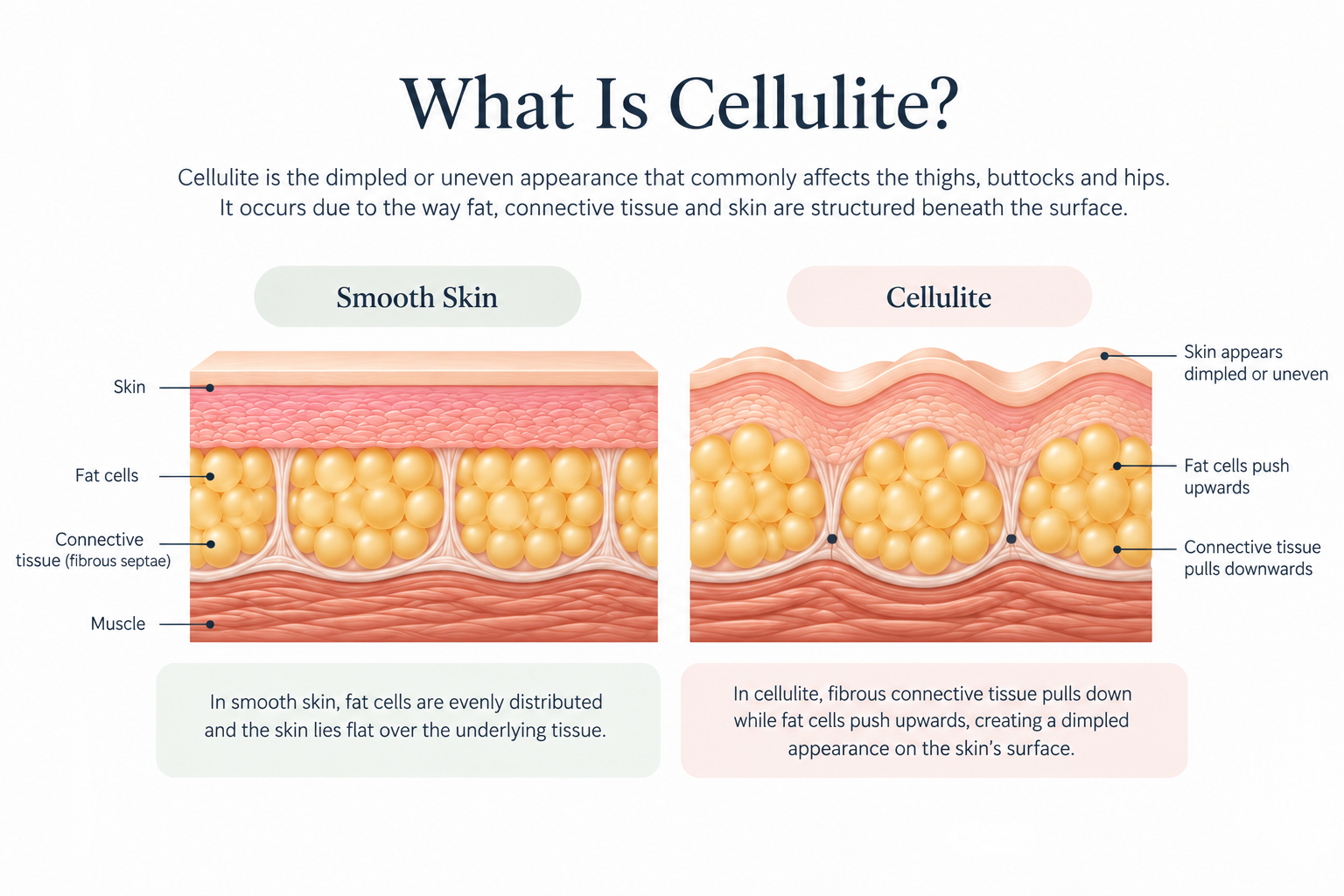
Cellulite is the dimpled or uneven appearance created partly by the way fat and fibrous connective tissue are arranged beneath the skin. Where connective bands pull down while fatty tissue pushes upwards, the surface can develop the familiar dips and bumps associated with cellulite.
How noticeable it becomes can be influenced by genetics, hormones, age, skin elasticity, connective tissue structure and the distribution of body fat. This is why cellulite can affect people of all shapes and sizes, including those who are slim and physically active, and why weight loss alone does not necessarily make it disappear.
Skin laxity is different. It occurs when the skin becomes less firm and does not sit as tightly against the underlying tissues. It can become more noticeable with age, after pregnancy or following weight loss as collagen and elasticity change.
The two can also overlap. Reduced skin firmness may make existing cellulite appear more obvious, while some areas may have a combination of dimpling, laxity and localised fat.
Understanding which concern is contributing most to the appearance of an area helps us choose treatment more appropriately. If laxity is the main issue, improving collagen and firmness may take priority. If cellulite is more noticeable, we need to consider the uneven tissue beneath the skin. Where several factors are present, a treatment that can address more than one may be useful.
Can Non-Surgical Treatments Improve Cellulite?
Yes, although it is important to be realistic about what "improvement" means.
Cellulite is influenced by anatomy, genetics and the structure of the tissue beneath the skin. A non-surgical treatment cannot change every factor involved or guarantee permanently smooth skin.
For mild to moderate cellulite, however, treatments that improve tissue firmness and target some of the factors contributing to an uneven contour can make the skin appear smoother.
This is where Liposhape can be particularly useful, because it combines several technologies rather than approaching cellulite as a surface skin concern alone.
What Is Liposhape and How Does It Work?
Liposhape Pro is a non-invasive body contouring platform that combines four technologies within one system: radio frequency, ultrasound cavitation, vacuum therapy and LED.
The advantage of this approach is that treatment can be tailored according to whether cellulite, laxity or localised fatty tissue is contributing most to the area being treated.
Radio Frequency
Radio frequency delivers controlled energy into the tissue to generate heat, supporting collagen production and firmer-looking skin.
This can be particularly useful where reduced firmness is making cellulite or body contours appear more noticeable.
Ultrasound Cavitation
Ultrasound cavitation uses low-frequency ultrasound to target localised fatty tissue.
It is intended for body contouring rather than weight loss, making it more relevant to smaller, stubborn areas that affect the shape or definition of the body.
Vacuum Therapy
Vacuum therapy uses controlled suction to manipulate the tissue and stimulate circulation and lymphatic flow.
This mechanical action can be particularly relevant when treating cellulite, where the concern involves the structure and appearance of the tissue beneath the skin rather than the skin surface alone.
LED Therapy
LED supports the cellular processes involved in skin rejuvenation and repair. Within Liposhape, it works alongside the other technologies rather than acting as the principal method of contouring or cellulite treatment.
Bringing these technologies together means we can tailor treatment according to what an individual area actually needs.
Who Might Liposhape Be Suitable For?
Liposhape may be considered when the aim is a non-surgical improvement in body contour and skin appearance.
We might consider it for someone with:
visible cellulite, particularly around the thighs or buttocks
mild to moderate skin laxity
small areas of stubborn localised fat
a combination of dimpling and reduced firmness
an area that would benefit from improved contour rather than significant fat or skin removal
It may also suit people looking for a non-invasive approach without the recovery associated with surgery.
Suitability still needs to be assessed individually. The fact that a device can technically treat a particular area does not automatically mean it is the most appropriate option for what you would like to improve.
What Are the Benefits of Liposhape?
One of the main benefits of Liposhape is its ability to address several aspects of body contouring within the same treatment platform.
Depending on the area and concern, treatment may help to:
smooth the appearance of cellulite
improve the look of mild skin laxity
support firmer, tighter-looking skin
target small areas of localised fat
improve the overall contour and definition of an area
support circulation and lymphatic flow
It is also non-invasive, so there are no incisions or surgical recovery.
For us, the versatility is particularly useful. Someone with cellulite may also have some loss of firmness, while another person may be more concerned about a small pocket of fat alongside lax skin. Rather than assuming every patient needs the same protocol, the different Liposhape technologies can be selected according to the concern being treated.
Can Liposhape Help You Lose Weight?
No. Liposhape is a body contouring treatment, not a weight-loss treatment.
This is an important distinction because body shape and body weight are not the same thing. A relatively slim person can still have cellulite or a stubborn pocket of fat. Equally, somebody who has lost a significant amount of weight may be left with lax skin rather than excess fatty tissue.
The aim of non-surgical body contouring is usually refinement, such as smoother-looking skin, improved firmness or a more balanced contour.
If significant fat reduction or removal of substantial excess skin is the objective, a non-surgical treatment may not provide the degree of change required. This is something we would discuss honestly during consultation before recommending treatment.
When Might Another Skin Tightening Treatment Be More Appropriate?
Liposhape is particularly useful when cellulite, localised fat and skin laxity overlap. However, not everybody looking for a body treatment has all three concerns.
If skin laxity is more significant and cellulite or localised fat is not the main issue, a treatment focused more specifically on collagen remodelling may be considered.
Morpheus8 combines fractional radio frequency with microneedling to remodel collagen and tighten the skin. At Sciene, it can be used on both the face and body.
The choice therefore depends on what we are treating. Liposhape may make more sense where cellulite and contour are priorities, while Morpheus8 may be considered where deeper skin tightening and collagen remodelling are the main objectives.
In some cases, treatments may also form part of a staged plan. We would normally assess how the tissue responds before adding another procedure rather than combining treatments unnecessarily.
FAQs About Cellulite and Skin Tightening
Does exercise get rid of cellulite?
Exercise can improve muscle tone and body composition, which may change the overall appearance of an area, but it cannot completely alter the connective tissue structure involved in cellulite. This is why cellulite can still be visible in people who exercise regularly.
At what age should you consider skin tightening?
There is no particular age. Treatment is based on the degree of laxity and what you would like to improve rather than your date of birth. Changes following pregnancy or weight loss, for example, can make body skin laxity relevant at a younger age.
Are cellulite treatments painful?
Liposhape is non-invasive. Depending on the technology being used, you may experience warmth or a suction sensation during treatment. Settings can be adjusted according to the area being treated and individual comfort.
How many Liposhape treatments will I need?
This will depend on the area, the concern being treated and its severity. Cellulite, skin laxity and localised fat do not necessarily require identical treatment plans, which is why we would recommend a course only after assessing the area.
How quickly will I see a difference?
This varies according to what is being treated. Changes involving collagen renewal develop progressively, so some improvements in skin firmness may become more noticeable over time rather than immediately.
Will I need maintenance treatments?
Possibly. Cellulite and skin laxity are influenced by factors including ageing, hormones, genetics and changes in body composition. Maintenance treatment may therefore be appropriate depending on how your skin and tissues change over time.
Considering Cellulite or Skin Tightening Treatment in London?
If you are concerned about cellulite, loose skin or a stubborn area of fat, the most useful first step is identifying what is actually contributing to the appearance of the area.
At Sciene London, our team in Muswell Hill can assess your skin and body contour and explain whether Liposhape, Morpheus8 or a staged approach is likely to be most appropriate, including what treatment can realistically achieve.
Our Muswell Hill clinic welcomes patients from across North London, including Highgate, Crouch End, East Finchley, Hampstead and the surrounding areas.
Book a consultation to discuss your concerns and find out which approach is most appropriate for you.
