

Menopause can change the skin in ways that are sometimes difficult to pinpoint. A moisturiser that has worked for years may suddenly feel insufficient. Skin can become drier or more sensitive, pigmentation may appear more noticeable, and changes in firmness and texture can seem to happen relatively quickly.
These changes are not simply cosmetic. Hormonal fluctuations during perimenopause and menopause influence several of the processes that help keep skin hydrated, resilient and supported.
As part of Menopause Awareness Month, we are taking a closer look at what happens to the skin during this stage of life and how appropriate skincare and professional treatments can help.
At Sciene in Muswell Hill, London, we often see women who do not necessarily want to look different. They want their skin to feel comfortable, healthy and more like their own again. Understanding what has changed is the best place to start.
How Does Menopause Affect Your Skin?
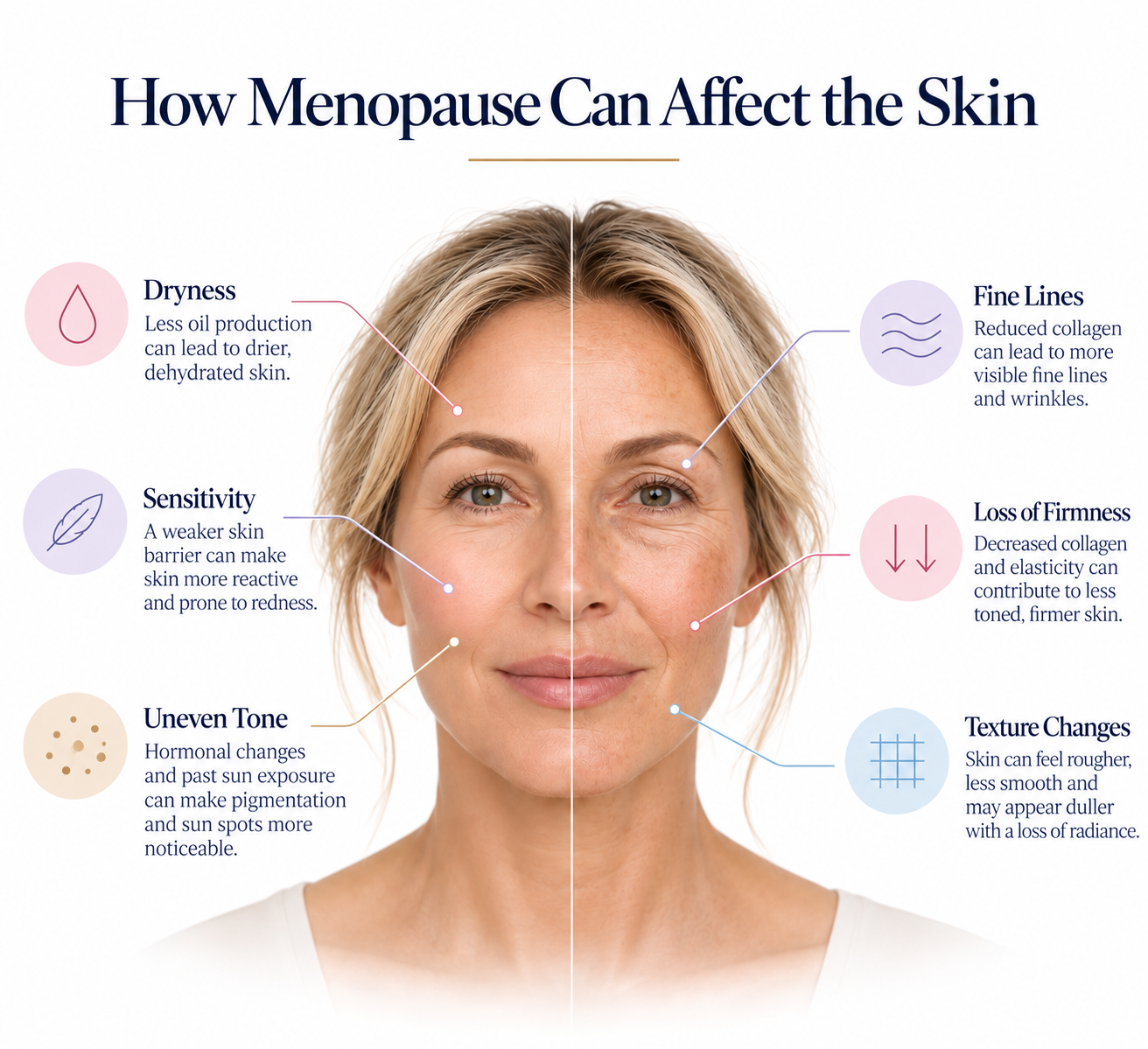
Many of the skin changes that happen during perimenopause and menopause are linked to falling oestrogen levels. Oestrogen supports several processes that help keep the skin hydrated, firm and resilient, including collagen production, oil production and the function of the skin barrier.
As levels fluctuate during perimenopause and decline around menopause, common changes can include:
dryness and dehydration
increased sensitivity
loss of collagen and elasticity
reduced firmness
more visible fine lines
changes in texture and radiance
pigmentation and uneven skin tone
Dryness is often one of the first things women notice. The skin may produce less oil and become less effective at holding onto moisture, which can leave it feeling tight, rough or more reactive. Products that have been used comfortably for years may suddenly sting or cause redness as the skin barrier becomes more vulnerable.
Changes also happen deeper within the skin. Collagen provides much of the structural support responsible for firmness and resilience. As collagen production reduces, the skin can gradually become thinner and less elastic, with fine lines, changes in texture and reduced firmness becoming more noticeable.
Pigmentation may change too. Hormonal fluctuations can influence melanin production, while accumulated UV exposure may become increasingly visible as sun spots and uneven tone. Women who are prone to melasma may also notice changes, although hormones are only one of several contributing factors.
These processes are closely connected, so dryness may occur alongside sensitivity, while pigmentation can sit alongside changes in texture and firmness. Identifying which changes are most prominent helps determine what the skin needs first.
What Can Help With Menopausal Skin Changes?
There is no single treatment for menopausal skin. The starting point depends on the condition of the skin and the changes that are causing the most concern.
Dryness and Dehydration
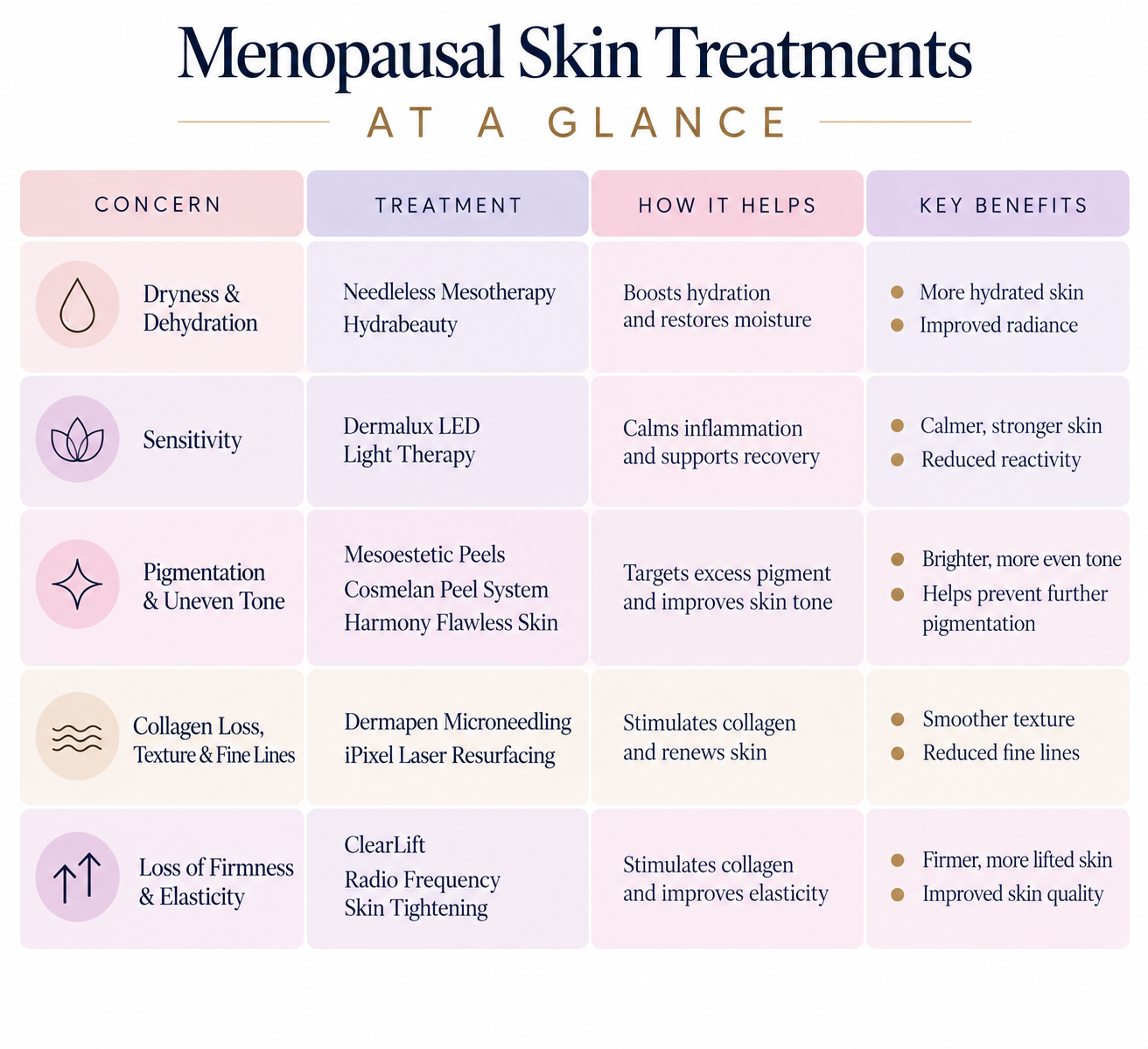
When dryness is prominent, the priority is restoring moisture and supporting the skin barrier. Needleless Mesotherapy can help improve hydration, while Hydrabeauty combines gentle exfoliation with hydration to refresh dry, dull skin.
Sensitivity
Reactive skin generally needs to be calmed before progressing to more corrective treatments. Simplifying skincare can help, while Dermalux LED Light Therapy may be used to support recovery without exfoliating or resurfacing the skin.
Pigmentation
Hormonal changes, UV exposure and inflammation can all contribute to pigmentation, so treatment depends on the type of discolouration present. Options at Sciene include Mesoestetic peels, the Cosmelan Peel System and Harmony Flawless Skin. Consistent daily SPF remains an important part of managing pigmentation.
Collagen Loss
Dermapen microneedling creates controlled micro-channels that encourage the skin's natural repair response and collagen production. It can be useful where fine lines, declining skin quality and textural changes have become more noticeable.
Loss of Firmness
ClearLift uses laser energy to stimulate collagen, while Radio Frequency Skin Tightening uses controlled heat to support collagen production and elasticity. The most appropriate option depends on the degree of laxity and overall condition of the skin.
Uneven Texture
Microneedling can support gradual improvements in roughness, pores and fine lines through collagen stimulation. For more established texture changes, sun damage or lines, iPixel Laser Resurfacing provides a more intensive resurfacing option. If the skin is particularly dry or reactive, we would usually improve its condition before progressing to stronger treatment.
Where Does Mesoestetic Skincare Fit Into Menopausal Skin Care?
Menopause can be a good time to reassess a skincare routine because products that suited the skin several years ago may no longer be appropriate.
Mesoestetic is used at Sciene as part of our professional skincare offering, including peels for concerns such as pigmentation and signs of ageing. The important part is choosing products and treatments according to how the skin is behaving now.
Dry or sensitive skin may initially need hydration and barrier support, while pigmentation may require more targeted ingredients. This does not mean menopausal skin automatically needs a stronger "anti-ageing" routine. Layering multiple active ingredients onto already reactive skin can increase irritation.
A considered routine built around appropriate formulations, consistency and daily sun protection is often more useful than simply adding more products.
Which Treatment Is Best for Menopausal Skin?
The right treatment depends on what is happening within the skin rather than menopause itself. Dryness, sensitivity, pigmentation, texture and loss of firmness require different approaches, and more than one may be relevant.
For skin with several concerns, we often work in stages rather than trying to address everything at once.
Can Menopause Skin Treatments Be Combined?
Yes. Combining treatments can be useful when different concerns are present, but they do not necessarily need to be performed at the same time.
For example, dehydrated or sensitive skin may need to be strengthened before more targeted pigmentation or resurfacing treatments are introduced. Someone experiencing dehydration alongside early loss of firmness may benefit from hydration support followed by gradual collagen stimulation.
The aim is to create a sensible sequence based on how the skin responds, with appropriate skincare helping to maintain results between treatments.
How Is Sciene Supporting Menopause Awareness Month?
Menopause affects far more than the skin, which is why our approach at Sciene extends beyond facial treatments alone.
Our feminine health offering in Muswell Hill has been developed to support women through different life stages, including peri- and post-menopause, with expertise spanning skin, intimate health, pelvic floor function, nutrition and wider wellbeing.
During Menopause Awareness Month, we want to encourage more open, useful conversations about these changes. Dry skin, pigmentation, changes in firmness, intimate dryness, pelvic floor symptoms and changes in energy or wellbeing may occur during the same stage of life, but they should not automatically be dismissed as something women simply have to put up with.
Understanding what has changed makes it easier to identify where professional advice, skincare, lifestyle support or treatment may genuinely help.
Frequently Asked Questions About Menopause and Skin
At What Age Should I Change My Skincare for Menopause?
There is no set age. Perimenopause can begin years before periods stop completely, so it makes more sense to respond to changes in your skin than to wait until a particular birthday.
Can I Still Use Retinol During Menopause?
Many women can, but tolerance may change. If a product you previously used comfortably begins causing persistent dryness, stinging or irritation, it is worth having your routine reviewed rather than simply increasing its strength.
Does HRT Improve Menopausal Skin?
Hormone replacement therapy may influence some menopause-related skin changes, but it is a medical treatment prescribed according to a woman's overall symptoms, health and individual risk profile. Whether HRT is appropriate should be discussed with an appropriately qualified healthcare professional.
Should I Stop Exfoliating if My Skin Becomes Dry During Menopause?
Not necessarily, but the frequency and strength of exfoliation may need adjusting. Persistent tightness, stinging, flaking or redness can be signs that the skin would benefit from a gentler approach.
How Long Does It Take to Improve Menopausal Skin?
It depends on the concern. Hydration and radiance may improve relatively quickly, while collagen remodelling, pigmentation and more established textural changes generally require a longer-term approach.
Supporting Your Skin Through Menopause at Sciene London
Menopausal skin can change considerably, which is why continuing with the same skincare or treatments used several years ago may no longer give the skin what it needs.
At Sciene in Muswell Hill, North London, we can assess your current skin condition and create a personalised approach spanning professional Mesoestetic skincare, hydration support, pigmentation correction and collagen-stimulating treatments.
If your skin has changed during perimenopause or menopause and you are unsure where to start, you can book a consultation with the Sciene team to discuss the most appropriate options for your skin.
